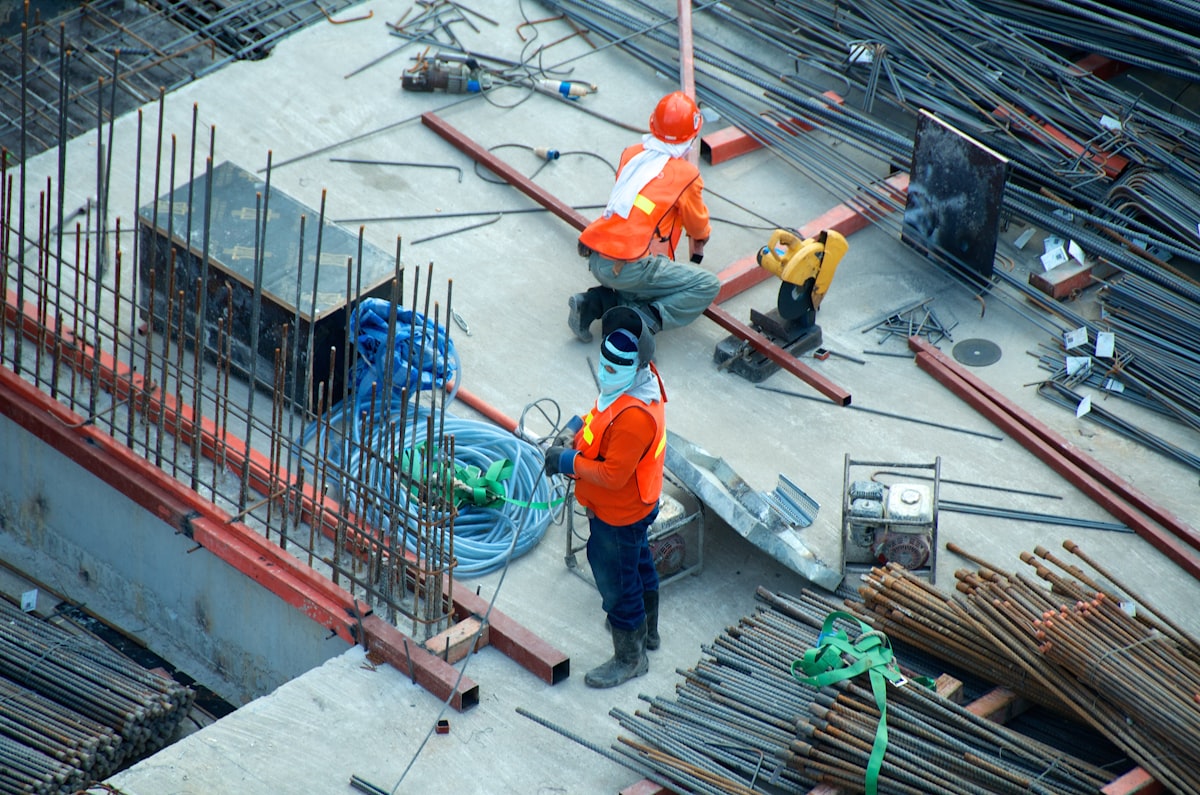
GFRP Rebar Installation on Site — A Step-by-Step Guide for Contractors
One of the most common questions from contractors new to GFRP rebar is: "Is it difficult to work with on site?"
The answer is — it is actually easier than steel. Lighter, faster to handle, and simpler to cut. Here is everything you need to know.
---
What You Need on Site
Tools required:
- Angle grinder with abrasive disc (for cutting)
- Standard steel binding wire and pliers (for tying)
- Normal measuring tape and chalk markers
- No special equipment needed for installation
What you do NOT need:
- Cutting torches
- Heavy lifting equipment for standard bars
- Special coatings or rust protection
---
Step 1 — Receiving and Storing GFRP Rebar
- Store GFRP bars on flat, clean ground — avoid standing water
- Keep away from direct flame or intense heat sources
- Stack straight bars horizontally; coils can be stored upright
- GFRP does not rust, so no special weatherproofing needed
---
Step 2 — Cutting GFRP Rebar
GFRP is cut using an angle grinder with an abrasive or diamond disc.
- Mark the cut point clearly
- Cut with steady, even pressure — do not force
- Wear dust mask and eye protection — glass fibre dust is an irritant
- Cut ends are clean and do not fray
Important: GFRP cannot be bent on site. All bends (hooks, stirrups, U-bars) must be ordered as pre-formed factory bends from RN Elements. Specify these in advance before ordering.
---
Step 3 — Placing and Tying
- Use standard steel binding wire or plastic zip ties to tie GFRP bars
- Tying technique is identical to steel reinforcement
- Use standard bar chairs and cover blocks to maintain correct cover
- GFRP is non-magnetic, so no issues near electrical or sensor equipment
---
Step 4 — Handling Advantages Over Steel
| Activity | Steel | GFRP |
|---|---|---|
| Carrying 6m bars | Needs 2–3 workers | 1 worker can manage |
| Unloading from truck | Crane or forklift often needed | Manual offloading easy |
| Moving around site | Heavy, tiring | Light and fast |
| Risk of rust staining | Yes | None |
On a typical mid-size project, contractors report 15–25% faster reinforcement placement with GFRP compared to steel.
---
Step 5 — Concrete Pouring
GFRP behaves normally during concrete pouring:
- Good bond with concrete through the ribbed/deformed surface
- No movement issues if properly tied
- No reaction with concrete chemistry
---
Common Mistakes to Avoid
- Do not try to bend on site — GFRP will crack. Order pre-formed bends.
- Do not cut with a hacksaw or hand tools — use an angle grinder.
- Do not compare lap lengths with steel — GFRP lap lengths are typically longer. Follow the structural drawing specifications.
---
Conclusion
GFRP rebar is not complicated to install — it is simpler and faster than steel for most site operations. The key difference is planning your bent bars in advance.
👉 Order pre-formed GFRP bars and site support from RN Elements →
| 📩 info@rnelements.in | 📞 +91 9227990800 |
|---|
RN Elements — for creators who build a legacy.